Showing posts with label Birds. Show all posts
Showing posts with label Birds. Show all posts


Common Babbler Bird
The common babbler (Turdoides caudata) is a member of the Leiothrichidae family. They are found in dry open scrub countries. The species is distinctly long-tailed, slim with an overall brown or greyish color, streaked on the upper plumage and having a distinctive whitish throat. They are found in small groups of six to twenty. They feed on insects, berries and grains. The nesting season is in summer from April to July. They build a shallow cup nest low in a thorny bush and lay about 2-4 turquoise blue eggs.


Common Babbler Bird
 |
| Common Babbler Nest |
Pied Kingfisher
The pied kingfisher (Ceryle rudis) is a water kingfisher and is found widely distributed across Africa and Asia. Its black and white plumage, crest and the habit of hovering over clear lakes and rivers before diving for fish makes it distinctive. Males have a double band across the breast while females have a single gorget that is often broken in the middle. They are usually found in pairs or small family parties. When perched, they often bob their head and flick up their tail.

Pied kingfisher
Indian Pond Heron
The Indian pond heron or paddybird (Ardeola grayii) is a small heron. It is of Old World origins, breeding in southern Iran and east to Pakistan, India, Burma, Bangladesh and Sri Lanka. They are widespread and common but can be easily missed when they stalk prey at the edge of small water-bodies or even when they roost close to human habitations. They are however distinctive when they take off with bright white wings flashing in contrast to the cryptic streaked olive and brown colors of the body. Their camouflage is so excellent that they can be approached closely before they take to flight, a behavior which has resulted in folk names and beliefs that the birds are short-sighted or blind.
Source of information: wikipedia.org


Source of information: wikipedia.org
Indian Pond Heron-Ardeola grayii


The Little Egret-Egretta garzetta
The Little Egret (Egretta garzetta) is a small white heron in the Genus Egretta, Family Ardeidae. It's attractive white plumes on crest, with slight neck, black, thin, pointed bill and black legs with yellow feet.


The Little Egret-Egretta garzetta


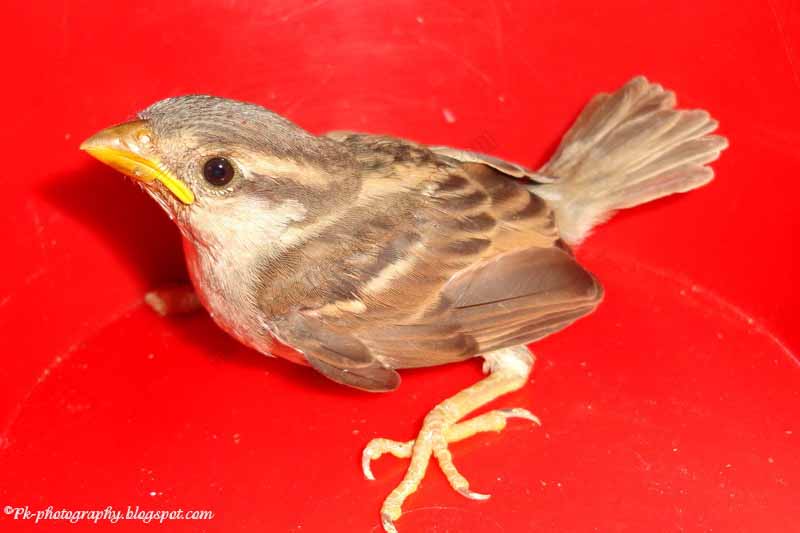


Baya Weaver Nest
Baya Weaver Nest


Here is a picture of Baya Weaver bird taken from a book.
 |
| Baya Weaver Bird |
Yellow-crowned Amazon
The Yellow-crowned Amazon or Yellow-crowned Parrot (Amazona ochrocephala), is a species of parrot in the family Psittacidae, subfamily Arinae. It's native to the tropical South America and Panama. They are on the average 33-38 cm long and weigh up to 500gm. They are mostly green having yellow crown and slashes of red feathers in the wings and near the base of the outer tail. They have orange eyes and white eye-rings. The beak and feet are gray. The Yellow-crowned Amazon is also known as the Yellow Fronted Amazon.

Yellow-crowned Amazon

National Bird Of Pakistan
The Chukar Partridge or more specifically Red-legged partridge (Alectoris chukar) is beautiful bird in the pheasant family Phasianidaethe. Chukar Partridge has black and white bars on the flanks and a black band running from the forehead across the eye and running down the head to form a necklace that encloses a white throat. It has red legs, beak and eye rims. Chukar Partridge is the national bird of Pakistan.
The gloomy and weak Chukar, you see here in the picture, is the true representation of Pakistani nation, who is facing in-numerous problems including poverty, high inflation rate, low education standard and literacy rate, unemployment, political instability, poor economic growth, terrorism, insecurity, corruption and particularly the energy crises. A nation who is facing 20-22 hours daily electricity load-shedding. A nation who claims to be the 7th Nuclear Power, but got no medal in the 2012 London Olympic games, even after 66 years of its independence.

The gloomy and weak Chukar, you see here in the picture, is the true representation of Pakistani nation, who is facing in-numerous problems including poverty, high inflation rate, low education standard and literacy rate, unemployment, political instability, poor economic growth, terrorism, insecurity, corruption and particularly the energy crises. A nation who is facing 20-22 hours daily electricity load-shedding. A nation who claims to be the 7th Nuclear Power, but got no medal in the 2012 London Olympic games, even after 66 years of its independence.
Chukar-National Bird Of Pakistan

House Crow-Corvus splendens
The House Crow (Corvus splendens), also known as the Colombo Crow is a common bird of the family Corvidae (Crow family). It's about 40 cm long and weigh about 250-350 gm. Breast forehead, crown, throat and upper are a richly glossed black, while the neck and breast are a lighter gray-brown. The wings, tail, bill and feet are black. They are omnivores, feeds on a variety of things including seeds, fruit, bird’s eggs, nestlings, reptiles, amphibians, fish, insects and carrion. Adverse impacts include food theft, crop-raiding and damage to livestock

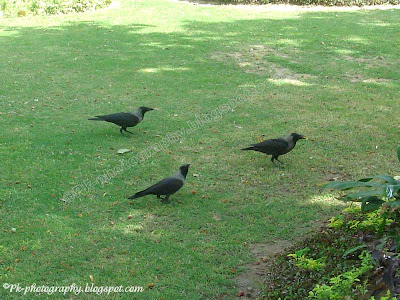

House Crow


Red-vented Bulbul-Pycnonotus cafer
The Red-vented Bulbul (Pycnonotus cafer) is a member of the family Pycnonotidae (bulbul family) in the order Passeriformes (Passerine birds), suborder Passeri. It has a body length of up to 8.5 inches long. It has a dark brown body with a scaly pattern while the head is black. The rump is white while the vent is bright red. The black tail is tipped in white. It is an economically important pest of agricultural crops and gardens. It feeds on fruits, vegetables, nectar and insects.


Red-vented Bulbul-Pycnonotus cafer


Southern Cassowary
Here you see a 45 year old Southern Cassowary from Lahore zoo. The Southern Cassowary (Casuarius casuarius) is a large flightless black bird in the family Casuariidae. It's also known as Double-wattled Cassowary, Australian Cassowary or Two-wattled Cassowary. It's the second heaviest bird on earth. The females average 58 kilograms and males averaging 29 to 34 kilograms. Their average length range from 127 to 170 centimeters and the height is ranging from 1.5 to 1.8 meters. They feed on fruit, plant shoots, grass seeds, fungi, invertebrates and small vertebrates.


Southern Cassowary


Demoiselle Crane
The Demoiselle Crane (Anthropoides virgo) is a species of crane in the family Gruidae. It's about 95 cm long with a 155–180 cm wingspan. It weighs 2–3 kg. It is the smallest species of crane.
The Demoiselle Crane is symbolically significant in the culture of India and Pakistan. In Urdu it's known as koonj (کونج).


The Demoiselle Crane is symbolically significant in the culture of India and Pakistan. In Urdu it's known as koonj (کونج).
Demoiselle Crane-Anthropoides virgo


Budgerigar Parakeet
The Budgerigar (Melopsittacus undulatus), is a small, long-tailed, parrots in the family Psittacidae, subfamily Psittacinae, tribe Platycercini (broad-tailed parrots). It's commonly known as common pet parakeet, shell parakeet or budgie. It feeds on grass seeds. In captivity millet seeds are a good food source.
Male and female can be easily distinguish by the cere (colored fleshy area above the nose). Males have a bluish or brighter colored cere whereas females have a brownish or dull colored cere. Moreover male has larger head as compare to that of female.
The female lays eggs in a clutch of 4-6 eggs. The eggs take 18 days to hatch and the young fledge after about a month. They can raise several broods per year.


Male and female can be easily distinguish by the cere (colored fleshy area above the nose). Males have a bluish or brighter colored cere whereas females have a brownish or dull colored cere. Moreover male has larger head as compare to that of female.
The female lays eggs in a clutch of 4-6 eggs. The eggs take 18 days to hatch and the young fledge after about a month. They can raise several broods per year.
Budgerigar-Parakeet Pictures


 |
| Close-up of Male Budgerigar Head |
 |
| Baby Budgerigar-Parakeet |
Subscribe to:
Posts (Atom)
