A photography blog that focus on Pakistan natural beauty, people, culture heritage, customs and traditions, historical places, travel destinations, wildlife: flora and fauna.
Asian Tiger Mosquito
The Asian Tiger Mosquito (Aedes albopictus) also known as "Forest Day Mosquito" is a species of mosquito in the family Culicidae. The adult is about 6 mm long. It has black and white striped legs and black and white striped body. It is called a tiger mosquito because its striped appearance is similar to a tiger. It feeds/bites in the daytime particularly in shades in addition to down and dusk. The Asian Tiger mosquito is an important vector for the transmission of many viral diseases to human hosts, including the West Nile virus, Yellow fever virus, dengue fever and Chikungunya fever. Besides human hosts it can also harbor diseases that affect animals.
Asian Tiger Mosquito-Aedes albopictus
Short-tailed Ichneumon Wasp (Ophion sp.)
The Short-tailed Ichneumon Wasp (Ophion Sp.) is a species of wasp in the family Ichneumonidae (Ichneumon Wasps), subfamily Ophioninae. They are solitary wasps. The adults feed on nectar while the larvae are parasites of caterpillars. The female parasitize caterpillars. Generally one egg is laid per caterpillars. Caterpillar usually dies during pupal stage. They are important natural biological control agent.
Short-tailed Ichneumon Wasp - Ophion Sp.
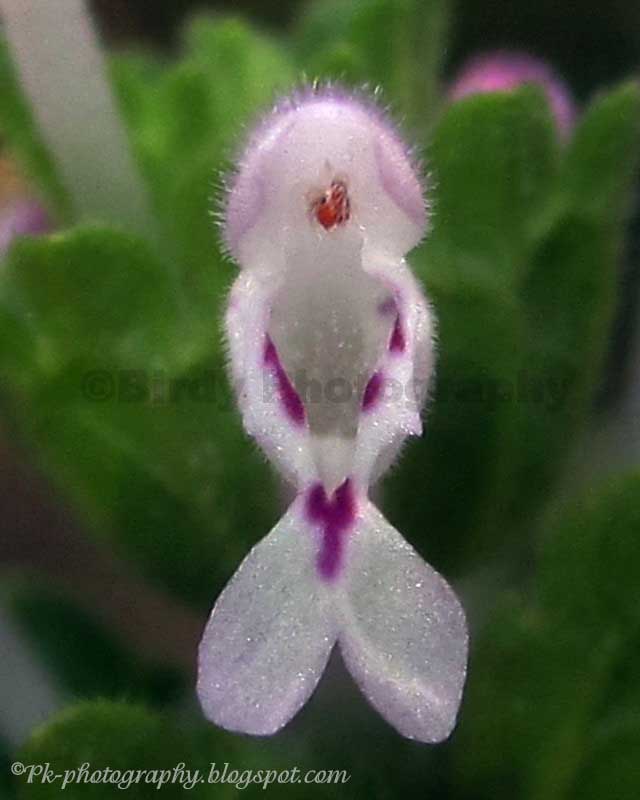
Henbit-Lamium amplexicaule
Henbit (Scientific name: Lamium amplexicaule) is a species of Lamium (deadnettle) in the family Lamiaceaen. It is a low-growing annual weed that grow 10-25 cm tall, with square stems. It has opposite toothed leaves (2-3 cm diameter) and small (1.5-2 cm long) two-lipped white or purplish-red flowers. It flowers early in the spring. It's an important nectar and pollen plant for bees. The specific name refers to the amplexicaul leaves (leaves clasping the stem). It is also known as Henbit Deadnettle or Greater Henbit.
Henbit-Lamium amplexicaule
Praying Mantis Life Cycle
After mating the female praying mantis lay eggs in a frothy mass, which harden over time to protect eggs and is called egg case or ootheca. The egg case is laid about 1 to 7 days after mating. The Egg case contains several hundred eggs, which grown into nymphs inside the egg case. The nymphs emerge from egg case in about 20-25 days depending on temperature. In cold weather development may take several months. The Nymphs resemble the grown up praying mantis in shape, but are smaller, wingless and may have different color. They molt several time before reaching to maturity.
Praying Mantis Life Cycle
Praying Mantis Babies Hatching
Video
Posted by
Birdy Official
Labels:
Insects,
Life cycle,
Praying mantis,
Praying mantis life cycle
No comments:
Weed Flowers
Here are the flowers pictures of some invasive weeds, which compete with wheat and some other crops and face zero tolerance from the farmers. But from other angle their flower structures and colors are very interesting and beautiful. These weeds must also have some health values for those, who are looking for alternative medicines. Being a photographer, here is my way of admiring their beauty. You are free to admire or disadmire them from your own angle.
Weed Flowers
Subscribe to:
Posts (Atom)