Showing posts with label Wild weed. Show all posts

Field Bindweed

Field Bindweed (Convolvulus arvensis) is a species of bindweed in the family Convolvulaceae (morning glory family ), native to Europe and Asia. It is a climbing or creeping herbaceous perennial plant growing to 0.5–2 m high. The leaves are spirally arranged, linear to arrowhead-shaped, 2–5 cm long and alternate, with a 1–3 cm petiole. The flowers are trumpet-shaped, 1-2.5 cm diameter, white or pale pink, with five slightly darker pink radial stripes. It's one of the most troublesome weeds of agricultural fields and gardens throughout temperate regions worldwide.

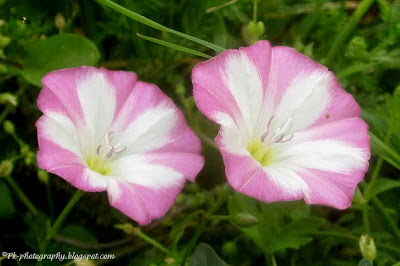
Field Bindweed Flowers
Field Bindweed
Field Bindweed
Field Bindweed
Field Bindweed
Field Bindweed

Milk Vetch

Milk Vetch or Milkvetch is a common name used for the plants species in the genus Astragalus (milkvetches), family Fabaceae. The species here is most probably Astragalus exscapus. It is a perennial flowering plant, produces yellow colored flowers in spring . It has pinnately compound leaves, grows up to 12 inch long. It grows wildly along field sides.

Milkvetche (Astragalus exscapus )
Astragalus-milkvetche

Punarnava-Boerhavia diffusa

Punarnava (Boerhavia diffusa), also know as spreading hogweed, pigweed, tar vine,Wineflower or red spiderling, is a species of flowering plant in the family Nyctaginaceae (four o'clock family). The word Punarnava meaning that which rejuvenates or renews the body. The leaves of Punarnava are often used as a green vegetable. It is used in herbal medicine for liver disorders including jaundice and hepatitis. It is believed to improve and protect eyesight. It has diuretic properties and is used by diabetics to lower blood sugar. Boerhavia diffusa is widely used for the treatment of jaundice in the animals and is proved very effective.

Punarnava-Boerhavia diffusa

Benghal Dayflower-Commelina benghalensis

Benghal Dayflower (Commelina benghalensis), also known as Tropical spiderwort is a perennial herb in the family Commelinaceae, subfamily Commelinoideae, tribe Commelineae. It produces blue colored flowers, which appear from spring to fall. It is usually considered a weed of economic consideration. It is a serious weed of maize crop in Pakistan. The plant has no local use, even farmer avoid it to feed to cattle. Locally it's known as Kanchara

Benghal Dayflower (Commelina benghalensis)
Benghal Dayflower
Benghal Dayflower
Benghal Dayflower
Benghal Dayflower

Common Chickweed-Stellaria media

The Common Chickweed (Stellaria media) is a widespread winter annual plant in the family Caryophyllaceae. It is also called Star Chickweed, Chickenwort, Craches, Maruns, Winterweed, Starweed. It has small (5 to 10 mm) white star-shaped, edible flower. The plant grows in fall or late winter and forms large mats of foliage. The flowers as well as the parts above ground are edible raw or cooked. It has some wonderful medicinal properties and is a rich source of many vitamins and minerals. It is a pest of economic consideration, causing heavy damage to wheat crop.

Common Chickweed-Stellaria media


Henbit-Lamium amplexicaule

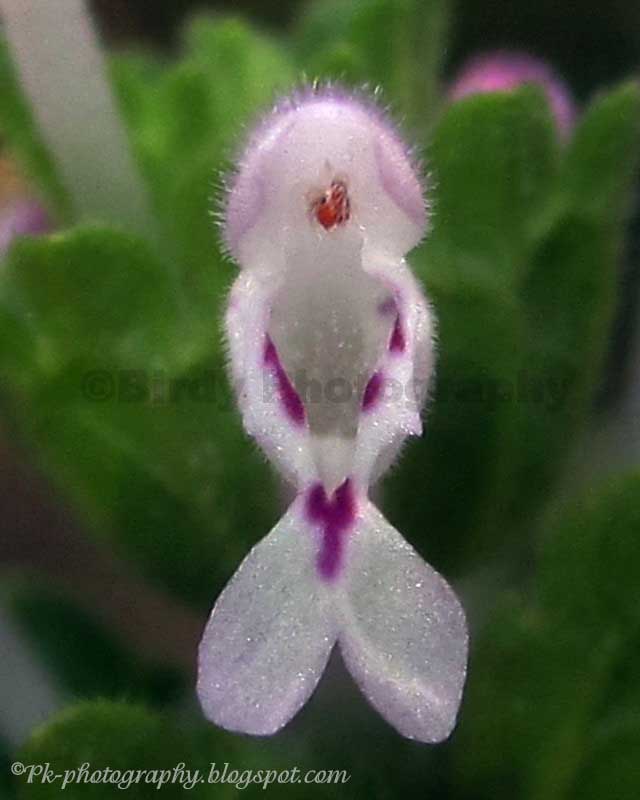
Henbit (Scientific name: Lamium amplexicaule) is a species of Lamium (deadnettle) in the family Lamiaceaen. It is a low-growing annual weed that grow 10-25 cm tall, with square stems. It has opposite toothed leaves (2-3 cm diameter) and small (1.5-2 cm long) two-lipped white or purplish-red flowers. It flowers early in the spring.  It's an important nectar and pollen plant for bees. The specific name refers to the amplexicaul leaves (leaves clasping the stem). It is also known as Henbit Deadnettle or Greater Henbit.

Henbit-Lamium amplexicaule

Weed Flowers

Here are the flowers pictures of some invasive weeds, which compete with wheat and some other crops and face zero tolerance from the farmers. But from other angle their flower structures and colors are very interesting and beautiful. These weeds must also have some health values for those, who are looking for alternative medicines. Being a photographer, here is my way of admiring their beauty. You are free to admire or disadmire them from your own angle.

Weed Flowers
Weed Flower
Weed Flower
Weed Flower
Weed Flower
Weed Flower
Weed Flower

Wild Strawberry-Potentilla indica

Wild Strawberry (Potentilla indica, formerly Duchesnea indica), also called mock strawberry, Gurbir, Indian strawberry or false strawberry belong to family Rosaceae. Its foliage and fruit are similar to true strawberry, though it is classified in a different genus, and has yellow flowers, unlike the white or slightly pink flowers of true strawberries. It is considered a noxious weed in some parts of the world.

Wild Strawberry (Potentilla indica)
Wild Strawberry
Wild Strawberry
Wild Strawberry

Wild Poppy

Wild Poppy Flowers
Wild Poppy Bud

Persian Speedwell-Veronica persica

The Persian speedwell (Veronica persica) is a flowering plant in the family Plantaginaceae of order Lamiales. Other common names of Persian speedwell are bird's eye speedwell, winter speedwell or common field speedwell. It has about 7–12 mm wide and long blue color single flowers, with darker lines and white centers. It's an unwanted weed, which effects agricultural crops. This weed becomes a headache for the farmers, when it grows in a large number in clover fields. Animals don't like to eat it. Moreover according to the local farmers, it creates some negative impacts on cattle health, when they eat it. Therefore the farmers have to remove it from clover field manually. However butterfly lover will certainly love Persian speedwell, as it is one of the host plants for blue pansy butterfly.

Veronica persica Plant and Flower

Veronica persica Flower
Veronica persica Small Plants

Scarlet Pimpernel Flowers

The Scarlet pimpernel (Anagallis arvensis) is a low-growing annual plant in family Myrsinaceae. This is a weed (unwanted plant) that grow along field sides and even in wheat crop. They have tiny flowers with a 6-7 mm diameter and 5 petals. The flower can be red, orange or blue with a dark purplish center. The flowers are light sensitive that open in sunlight and fold up in the dark. Their common names include blue pimpernel, red pimpernel, poorman's barometer, shepherd's weather glass or shepherd's clock. Locally it's known as Mangota or udigulay. In NWFP both blue and red species of Scarlet pimpernel grow. The blue species grow in plain areas, while the red or orange species grow in hilly areas.

Scarlet Pimpernel Flowers

Related Posts Plugin for WordPress, Blogger...