Showing posts with label Cricket. Show all posts

Mole Crickets

The Mole crickets are insects in the family polyphagous. They are subterranean dwellers, and some species are capable of flight. They are brownish and very fat, measuring about 25-40 mm long. They have short antennae. The enlarged front legs are modified for burrowing and swimming. They are polyphagous feeding on larvae, worms and roots. Mole crickets are a serious agricultural pest, cause heavy damage, particularly at the young stage of crops. Nymphs look very similar to adults but have shorter wings.

Mole Crickets
Mole Cricket picture
Mole Cricket Nymph

Long-winged Conehead

The long-winged conehead (Conocephalus discolor) is a member of the family Tettigoniidae, generally known as katydids or bush crickets. It has a body length of about 18-22mm. It has a green colored body with brown wings, which exceed beyond the tip of its abdomen. Females are easily distinguished from males by their long brown colored ovipositor.

Long-winged Conehead (Conocephalus discolor) Female
Long-winged Conehead (Conocephalus discolor) Male

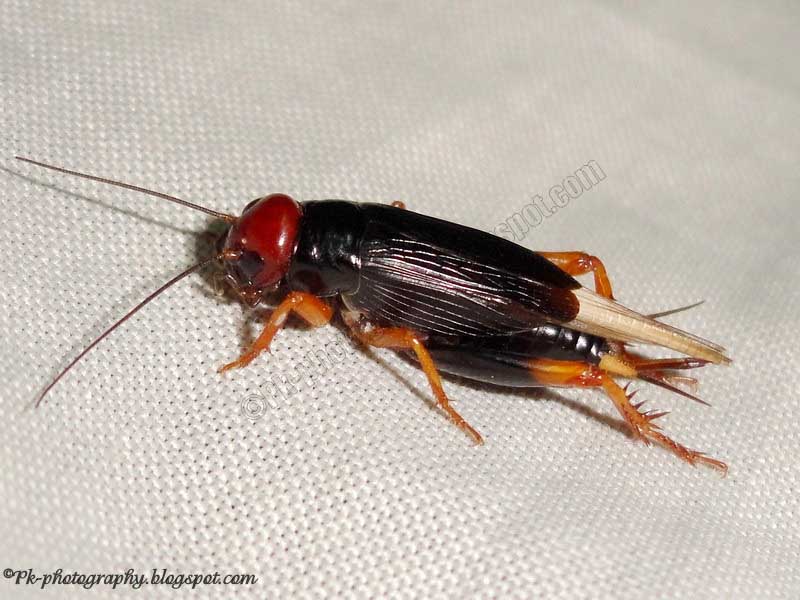
Indian House Cricket (Gryllodes supplicans)

Indian House Cricket (Gryllodes supplicans) also known as Tropical House Cricket or Decorated Field Cricket is a species of cricket in the family Gryllidae (True Crickets), subfamily Gryllinae (Field Crickets). Adult crickets are about 18-22 mm long, having pale color with dark markings on the thorax and abdomen. The young look similar to adults, but don't have wings. This species lives inside homes and is considered a nuisance pest. It feeds on leftover food, plants debris, small insects and insect remains. It also feeds on fabrics and papers.

Indian House Cricket Immature Female
Indian House Cricket Female
Indian House Cricket  Immature Male
Indian House Cricket Male

Great Green Bush Cricket

The Great Green Bush-cricket (Tettigonia viridissima) is a species of bush cricket (katydid) in the family Tettigoniidae. Their nymphs start emerging in February. The species is abundant in plain areas of NWFP and is consider a pest of economic significance, damaging wheat and tobacco crops.

Great Green Bush Cricket Male
Bush Cricket
Great Green Bush Cricket Female
Bush Cricket

Bush Cricket
Great Green Bush Cricket Female Eating a Male
Bush Cricket
Great Green Bush Cricket Nymph
Bush Cricket

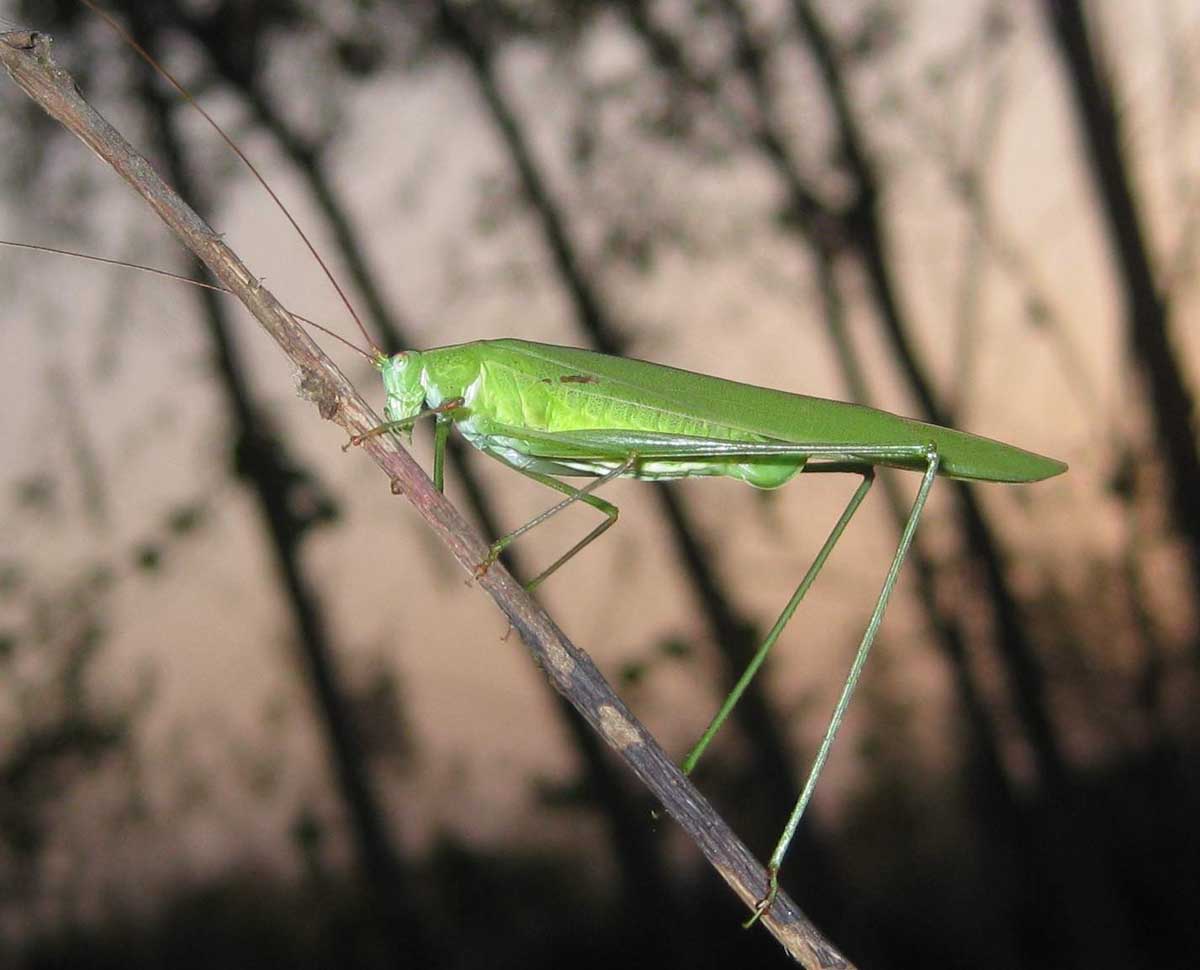
Sickle-bearing Bush-cricket

Sickle-bearing Bush-cricket (Phaneroptera falcata) belong to family Tettigoniidae (Katydids or Bush-crickets), subfamily Phaneropterinae. They are very similar to great green bush-crickets, but have slenderer bodies and longer hind pair of legs. In great green bush-cricket both wings are of the same length, while in the Sickle-bearing Bush-cricket the top wing is shorter. They have very long hind wings almost double the body length.

Sickle-bearing Bush-cricket Male
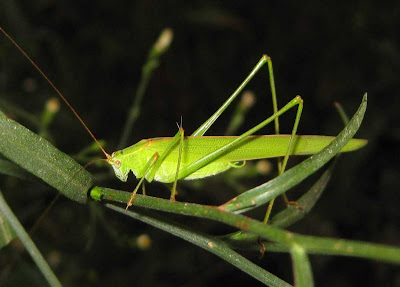
Sickle-bearing Bush-cricket male
Sickle-bearing Bush-cricket Female
Sickle-bearing Bush-cricket female

Brown Speckled Katydid/Bush Cricket

Here are a few pictures of an unidentified short-winged katydid/bush cricket (family: Tettigoniidae) sitting on a wild marijuana leaf. It has a greenish brown body with black/dark-brown speckles on its body and that is why I called it brown speckled katydid. It will be more suitable to name it as 'brown speckled short-winged katydid'.

Any help regarding the correct identification will be highly appreciated.

Brown Speckled Katydid/Bush Cricket
Brown speckled short winged katydid/bush cricket pictureBrown speckled short-winged katydid/bush cricket pictureBrown speckled short-winged katydid/bush cricket picture
Related Posts Plugin for WordPress, Blogger...