Showing posts with label Medicinal plants. Show all posts

Vitex negundo

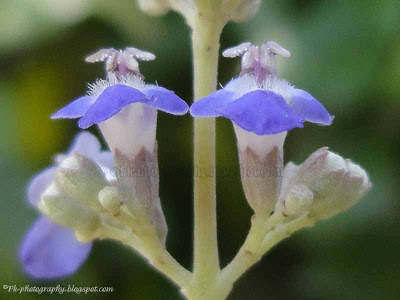
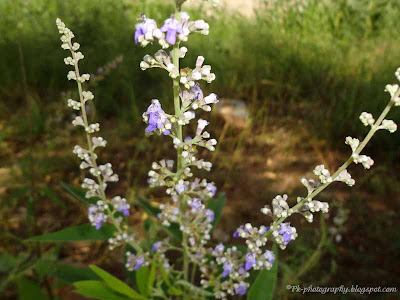
Vitex negundo, commonly known as the five-leaved chaste tree a small erect tree in the family Lamiaceaeis, that can reach up to 5 meters tall. The plant has evergreen leaves, usually with five lanceolate leaflets per leaf. Flowers are numerous, blue to lavender, 6 to 7 mm long, borne on 10 to 20 cm long terminal panicles . Vitex negundo is widely used in folk medicine. Leaves, seeds, bark and roots are used for the treatment of various illnesses including cough, colds, fever, headache, toothache, asthma, menstrual difficulties and amenorrhea.

 Vitex negundo
Vitex negundo flowers
Vitex negundo
Vitex negundo leaf
Vitex negundo

Adhatoda vasica

Adhatoda vasica (syn. Justicia adhatoda ) commonly known as Malabar Nut is a small evergreen plant in the family Acanthaceae. It's native of  Asia,  grows wild in  India, Pakistan, Sri Lanka, and Nepal. Its broad and smooth-edged, lanceolate leaves measuring 4 to 6 inches in length and 2 inches wide. The flower has large, white petals, streaked with purple on the lower lip. The fruit is a small capsule with 4 seeds. It's traditionally used for the treatment of many ailments including fever, rheumatism, cough, asthma, bronchitis and tuberculosis. It is the provincial flower of the Punjab province of Pakistan. In local language Pashto it's known as Bhekkar.

Adhatoda vasica
Adhatoda Vasica Plant
Adhatoda Vasica leaves
Adhatoda Vasica Flower

Punarnava-Boerhavia diffusa

Punarnava (Boerhavia diffusa), also know as spreading hogweed, pigweed, tar vine,Wineflower or red spiderling, is a species of flowering plant in the family Nyctaginaceae (four o'clock family). The word Punarnava meaning that which rejuvenates or renews the body. The leaves of Punarnava are often used as a green vegetable. It is used in herbal medicine for liver disorders including jaundice and hepatitis. It is believed to improve and protect eyesight. It has diuretic properties and is used by diabetics to lower blood sugar. Boerhavia diffusa is widely used for the treatment of jaundice in the animals and is proved very effective.

Punarnava-Boerhavia diffusa

Indian Catmint-Anisomeles indica

Indian Catmint (Anisomeles indica) also known as Malabar Catmint is a species of flowering plant in the family Lamiaceae (Mint family), subfamily Lamioideaeis. The plant grows 1-2 m tall and produce purplish blue flowers, 1-1.2 cm long. Flowering season is from August to late fall. The Indian Catmint is considered as medicinal plant and is traditionally used for the treatment of many ailments, including rheumatism, abdominal pain, colds, fevers, skin sores and snake bites. Recent studies show that the plant is also effective against HIV and Cancer.

Indian Catmint (Anisomeles indica)
Indian Catmint-Anisomeles indica

Common Chickweed-Stellaria media

The Common Chickweed (Stellaria media) is a widespread winter annual plant in the family Caryophyllaceae. It is also called Star Chickweed, Chickenwort, Craches, Maruns, Winterweed, Starweed. It has small (5 to 10 mm) white star-shaped, edible flower. The plant grows in fall or late winter and forms large mats of foliage. The flowers as well as the parts above ground are edible raw or cooked. It has some wonderful medicinal properties and is a rich source of many vitamins and minerals. It is a pest of economic consideration, causing heavy damage to wheat crop.

Common Chickweed-Stellaria media


Dengue Fever Epidemic in Pakistan

Pakistan is facing dengue fever epidemic these days. In the last two weeks more than 6,000 cases have been reported and at least forty people have died.
This post is intended to help the people effected by dengue fever.
Papaya leave juice is proven to be very effective against dengue fever. Only two spoonful of raw papaya leaves juice, taken once a day can help dengue patients increase their platelet count and therefore overcome the fever. Ready-made papaya leave juice/syrup is available in Pakistani markets, which is especially prepared to treat dengue fever. The syrup is prepared by Dr. Asif Mehmood Jah. According to Dr. Asif Mehmood Jah, the papaya syrup is given to two hundred patients and proved effective. To get the syrup in Peshawar or for further information you can contact on Mobile Number: 03335511132

Papaya for Dengue

You can also prepare the juice at home, if the papaya leaves are available.
Here is how to juice the leaves:
For each dose of 2 tablespoonfuls once a day, you need 2 papaya leaves. Clean and pound them, and squeeze it with a filter cloth. Do not boil or cook or rinse with hot water. Use only the leafy part with no stem or sap.
ڈینگی بخار کے علاج کیلۓ ڈاکٹرآصف محمود جاہ کی بنائی ھوئی دوا شربت پپیتہ اسلم مروت پشاور  سے حاصل کرنے اور دیگر معلومات کے لئے اس نمبر پررابطہ کریں. 03335511132
Frog Fruit-Phyla nodiflora

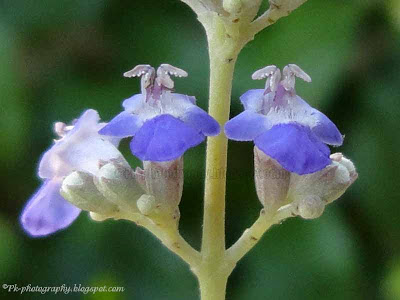
The Frog Fruit (Phyla nodiflora or Lippia nodiflora), is flowering, broadleaf plant in the Verbenaceae family. It grow wildly along field sides. The vine like branches of the plant grow up to 3 feet long. Dense growth of the plants present a very beautiful view and serve as a ground-cover. I like this plant because it's one of the host plants of Peacock pansy butterfly in our area. The inflorescence consists of a purple-colored center encircled by small white-to-pink flowers. Other common names of frog fruit are sawtooth fogfruit, turkey tangle and matchweed.

Frog Fruit-Phyla nodiflora
(09/06/2011) My mother brought some frog fruit plants to home. I ask her, what will she do with it and she told me that it is a medicinal herb and is excellent remedy for jaundice. In Urdu its called "Jal buti"  and in domestic language Pashto it is called "Aspa buti".

Black Nightshade-Solanum Nigrum

Black Nightshade (Solanum Nigrum) is a short-lived perennial herb in the family Solanaceae (Nightshade family). Some species in the nightshade family are considered poisonous, because of the alkaloids present in them. The species I'm presenting here is a wild species, but now people start growing it commercially. These days black nightshade is available in almost all veggie vendors and people cook and eat it like other greens. The dark purple colored berries of black nightshade is also eaten. It's a medicinal plant used locally for treating many diseases, like jaundice, diarrhea and vomiting etc.

Black Nightshade-Solanum Nigrum
Nightshade Plant
Nightshade Plant
Nightshade Plant
Black Nightshade (Solanum Nigrum) Flowers
Nightshade Flowers
Black Nightshade Berries
Nightshade Berries
Nightshade Berries

Ashwagandha-Withania somnifera

Ashwagandha (Withania somnifera) is a medicinal plant in Solanaceae or nightshade family, which is widely used in Ayurvedic medicine. In Pakistan it grows wildly on fields sides and uncultivated lands and reach a height of about 5 to 6 feet. Ashwagandha is also known by a number of other names like Indian ginseng, Winter cherry, Ajagandha and Kanaje Hindi etc. In domestic language Pashto it's called Koti lal (Koti=ball, Lal= red), may be because of its red colored round fruit. In Urdu Ashwagandha is called Asgandha or Asgund (اسگند).
I've grown a few Ashwagandha plants at my farmhouse this year. Now the plants are about three months old. I have grown them for personal use and will try to validate it medicinal properties. I'm also interested in growing it commercially, but I will first search for its market.

Ashwagandha-Withania somnifera
Ashwagandha-Withania somnifera Plant
Ashwagandha Plant
Ashwagandha-Withania somnifera Plant
Ashwagandha Plant
Ashwagandha-Withania somnifera Plant
Ashwagandha Plant
Ashwagandha-Withania somnifera Leaves
Ashwagandha Leaves
Ashwagandha-Withania somnifera FLowers
Ashwagandha Flower
Ashwagandha-Withania somnifera Fruits
Ashwagandha Fruits
Ashwagandha-Withania somnifera Fruits
Ashwagandha Fruits
Ashwagandha-Withania somnifera Seeds
Ashwagandha Seeds
Ashwagandha-Withania somnifera Root
Ashwagandha Root

Aloe Vera Plant and Flowers

Aloe vera is a species of succulent plant. It's is a stemless or very short-stemmed succulent plant growing to 60–100 cm (24–39 in) tall, spreading by offsets. The leaves are thick and fleshy, green to grey-green, with some varieties showing white flecks on the upper and lower stem surfaces. The margin of the leaf is serrated and has small white teeth. The flowers are produced in summer on a spike up to 90 cm (35 in) tall, each flower pendulous, with a tubular corolla 2–3 cm (0.8–1.2 in) long. Some other names of Aloe Vera are burn plant, lily of the desert and elephant's gall. For detail visit: wikipedia


Aloe Vera Plant
Aloe Vera Plant
Aloe Vera Blooms
Aloe Vera BloomsAloe Vera BloomsAloe Vera Blooms-Flowers

Milk Thistle Seeds

In spite of its important medicinal properties, milk thistle (Silybum marianum) is an unwanted plant for us that grow wildly on empty fields, fields borders and road sides. Milk thistle seeds extract contains active compound flavonolignans known as silymarin, which contain silybinin, isosilybinin, silychristin and silydianin. The seeds extract is used internally for liver cirrhosis and damage, dyspeptic complaints, jaundice, hepatitis and gallbladder disorders.

Milk Thistle Seeds
Milk Thistle Seeds
Milk Thistle Seeds
Milk Thistle Seeds
Related Posts Plugin for WordPress, Blogger...